


By Kevin Dean
Transforming your entryway into an organized and functional mudroom can be a straightforward home renovation project. With creativity and suitable materials, you can achieve a stylish and practical mudroom using stock cabinetry. Stock cabinets can be adapted to create a space that meets all your storage needs. You can construct a mudroom that includes seating, storage, and coat hooks by strategically utilizing components such as fridge panels, finished plywood, and wall cabinets.
With careful planning, you can design a mudroom that enhances your home’s entryway. A mudroom can provide a dedicated spot for shoes, coats, and other daily essentials while maintaining an organized and clutter-free environment.

What is a Mudroom?
A mudroom is a dedicated home space designed to manage the transition between the outdoors and the indoors. Mudrooms often feature storage solutions such as benches, cubbies, hooks, and lockers. These elements provide convenient sitting spots while removing shoes, hanging coats, and storing bags and sports equipment.
The design of a mudroom focuses on functionality and durability. Materials such as tiles, durable flooring, and sturdy, wipeable surfaces are chosen for their ease of cleaning and ability to withstand heavy use. Practicality is essential, with layouts maximizing space for storage while ensuring easy access and organization of items. Many mudrooms are personalized with unique color schemes, materials, and decorative elements to blend seamlessly with the home’s overall aesthetic.
Mudrooms also serve as a buffer zone, reducing the amount of dirt, mud, and debris brought into the home. This area can significantly enhance the home’s cleanliness and organization, especially for families with children or pets. A mudroom helps maintain order and efficiency in daily routines by providing a designated spot for outdoor gear, making it a valuable addition to many homes.
How to Create a Mudroom in Your Home?
Creating built-in mudroom cabinets involves constructing a unit with open cubbies, drawers, and hooks. The process includes building the base and frame, assembling and attaching cubbies and dividers, installing drawers, adding trim, and painting. The design provides ample storage for shoes, coats, and bags while ensuring the structure is sturdy and aesthetically pleasing.
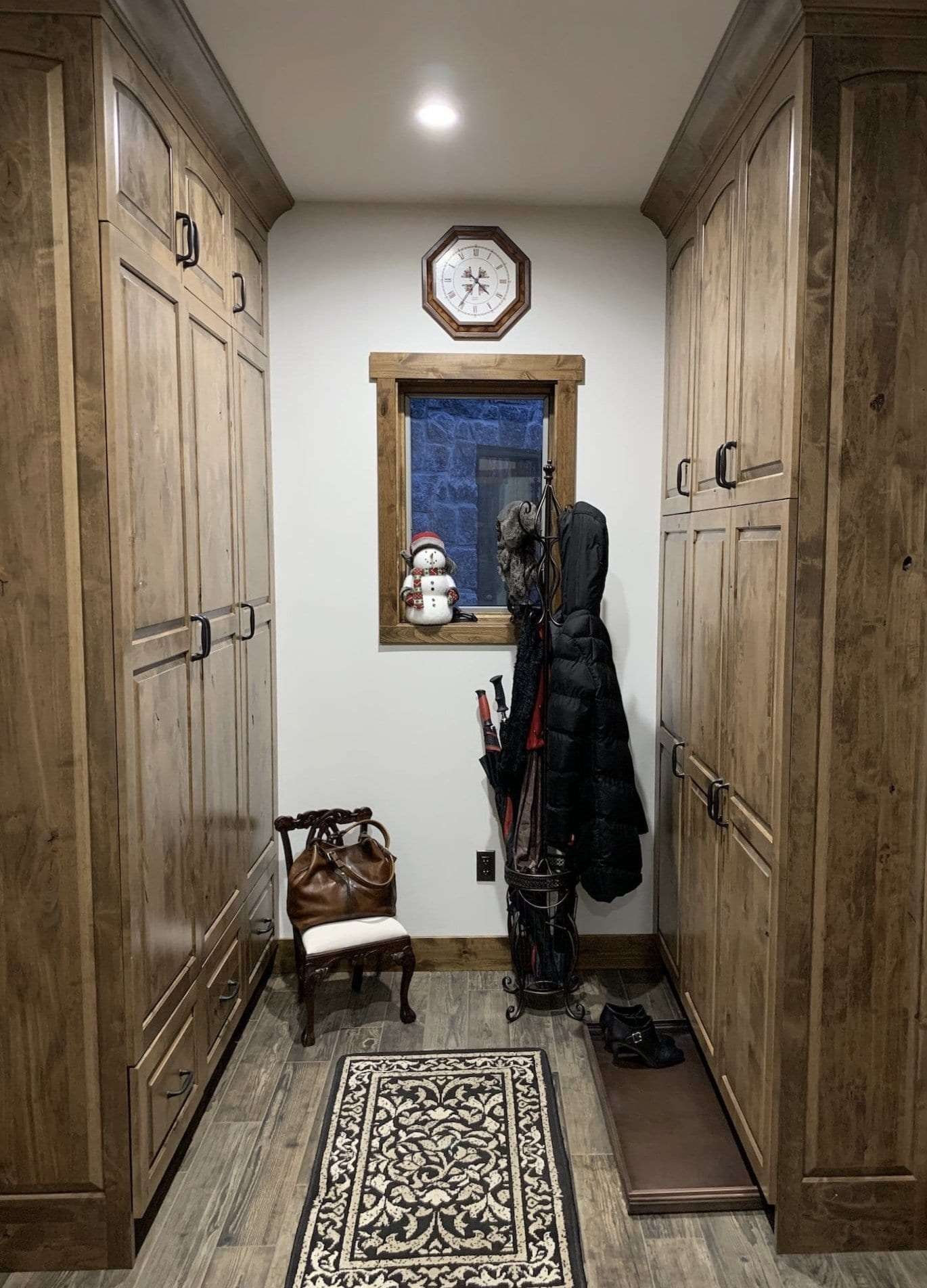
Other design options include a mudroom storage locker, which involves constructing frames and compartments; we can install hooks or add baskets for more organization. This can be practical and useful by providing organized spaces for a family’s shoes, coats, and backpacks. This may require custom cabinets, but your cabinet designer can help you find the best solutions.
Mudroom designs can vary widely, from traditional to modern styles. Key features include:
- benches
- storage cubbies
- cabinets
- built-in shelving
We often personalize these spaces with unique color schemes and materials like wood and metal. These designs prioritize functionality, maximizing space for essentials while ensuring durability and aesthetic integration with the home decor.
What if I Don’t Have Space for a Mudroom?
You do not need a designated mudroom to enjoy its organizational benefits. An adequate space near a frequently used entrance can serve the same purpose. For instance, a hallway, foyer, kitchen, or living room corner can transform into a functional mudroom area.
Start by incorporating a sturdy bench with built-in storage, which provides a place to sit while putting on or removing shoes and keeps footwear neatly organized. Above the bench, install hooks or pegs for hanging coats, bags, and hats. Adding shelves or cubbies above or below the bench offers additional storage for items like gloves, scarves, and sports equipment.
Using baskets or bins can help keep smaller items organized and out of sight. A shoe rack or tray can prevent dirt and mud from spreading into the house. Consider using durable, easy-to-clean materials like tiles or vinyl for the floor and walls to withstand heavy use and frequent cleaning. Personalize the space with decorative elements that match your home’s aesthetic, such as colorful hooks, patterned cushions, or a stylish coat rack.
Even without a designated room, these simple additions can create an efficient and attractive entryway that captures the essence of a mudroom, helping to maintain order and cleanliness in your home.
Build a Mudroom Out of Stock Cabinetry
Building a mudroom out of stock cabinetry involves using materials from stock or semi-custom kitchen cabinetry catalogs. Creativity is necessary since these companies typically don’t offer specific mudroom materials. Generally, stock and semi-custom mudrooms are constructed using cut-down fridge panels, ¾” finished plywood, and wall cabinets.
Additional elements include crown molding on top of the wall cabinets and toe kick or baseboard molding. Decorative paneling, such as beadboard, for the walls or back of the entryway setup can elevate the space. Stock cabinetry can help you create a functional and visually appealing mudroom without the custom price.
You can also utilize semi-custom cabinetry, which is often more budget-friendly than fully custom options. While there may be certain design limitations, our team can offer creative solutions for your mudroom. We recommend using stock and semi-custom cabinet line materials to achieve your desired mudroom.
Selecting and arranging cabinets thoughtfully can create a stylish mudroom. This will help you meet your storage requirements and enhance the appearance of your home’s entrance.
What are the Standard Elements of Mudroom Cabinets?
Mudroom cabinets are designed to optimize functionality and organization in transitional or highly used spaces. They typically have three major components: seating, storage, and coat hooks. The seating element, usually a bench, provides a place to sit while removing or putting on shoes.
Below the bench, there is often some form of storage, which can vary from open cubbies to cabinets with doors or drawers. This area is ideal for storing shoes, boots, and other frequently used items. A common trend is to add coat hooks in the mudroom to keep jackets and backpacks off the floor and organized.
In addition to the coat hooks, there is usually additional storage above the bench. This upper storage can take several forms, such as open shelves, cabinets with doors, or floating shelves designed to hold baskets or bins. It is a great option for storing seasonal items and sports equipment.Standard mudroom options can include decorative features such as paneling or beadboard. Many people add crown molding and toe kicks to their cabinets for a finished look. Your design expert can help custom-fit the space to your needs.

Can You Design Mudroom Cabinets with a Bench?
There aren’t any fixed dimensions for mudrooms because they can be customized to the client’s needs. However, we recommend following general measurements to create a comfortable and usable space. The mudroom bench should be anywhere from 16” to 18” deep.
We usually design the bench between 16.75” and 18” high. Lastly, the height from the bench top to the coat hooks should be 35” to 50” to accommodate long coats. You can also choose a bench with additional storage for larger seasonal or sports items.
Dean Cabinetry Mudroom Cabinetry Ideas
Every house and mudroom is different, but at Dean Cabinetry, we offer kitchen design services that will help you every step of the way. You can visit our kitchen showroom in Bolton, CT, or virtually work with one of our kitchen designers.
Our team will show you layout and cabinet options that fit your home style and budget. We will provide recommendations based on your needs and continue working with you from start to finish on your project.
There are many ways to create custom or stock mudroom storage cabinets. We’d be happy to discuss suggestions to enhance the space’s functionality.